
Viscount White Granite
Viscount White Granite
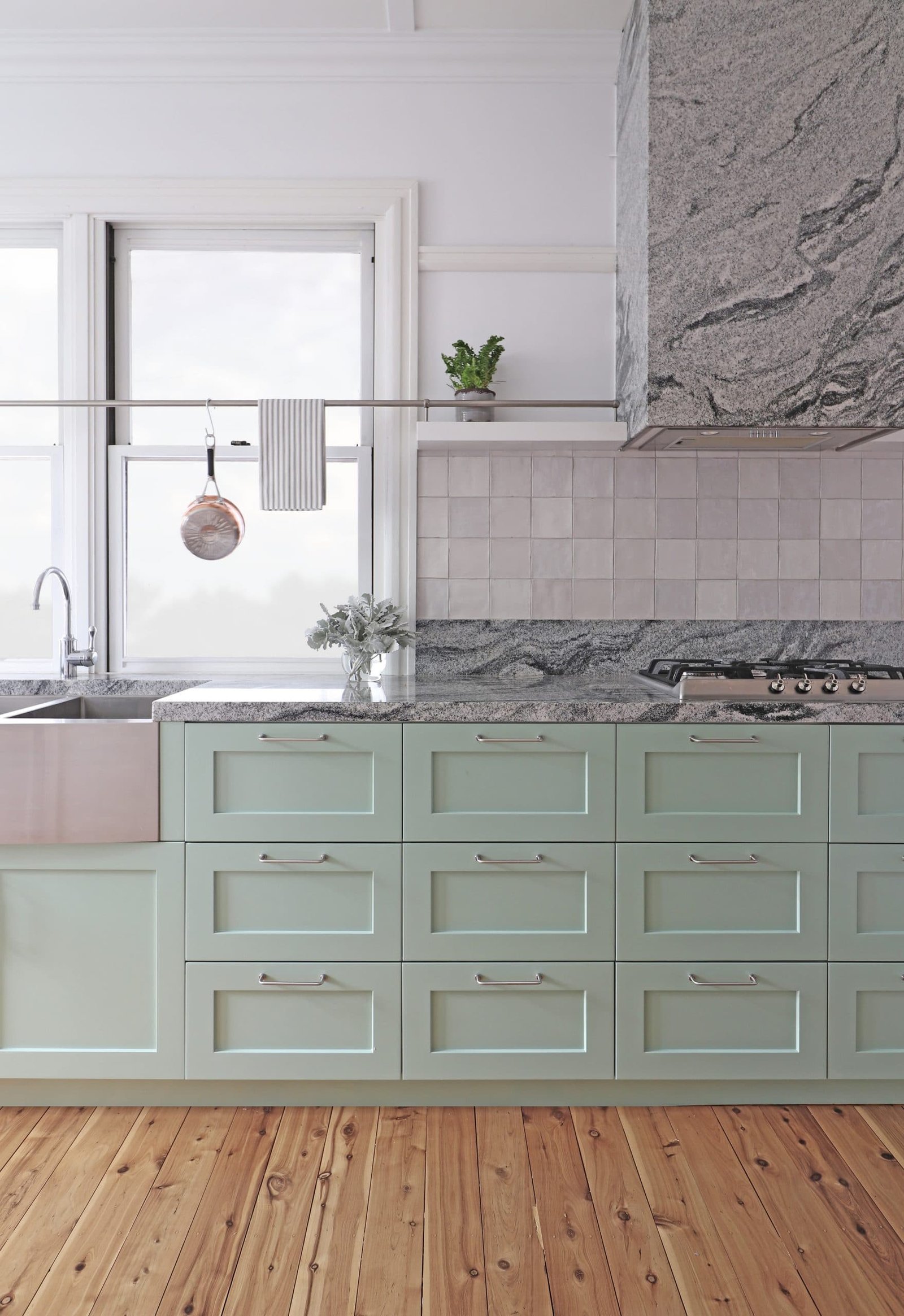
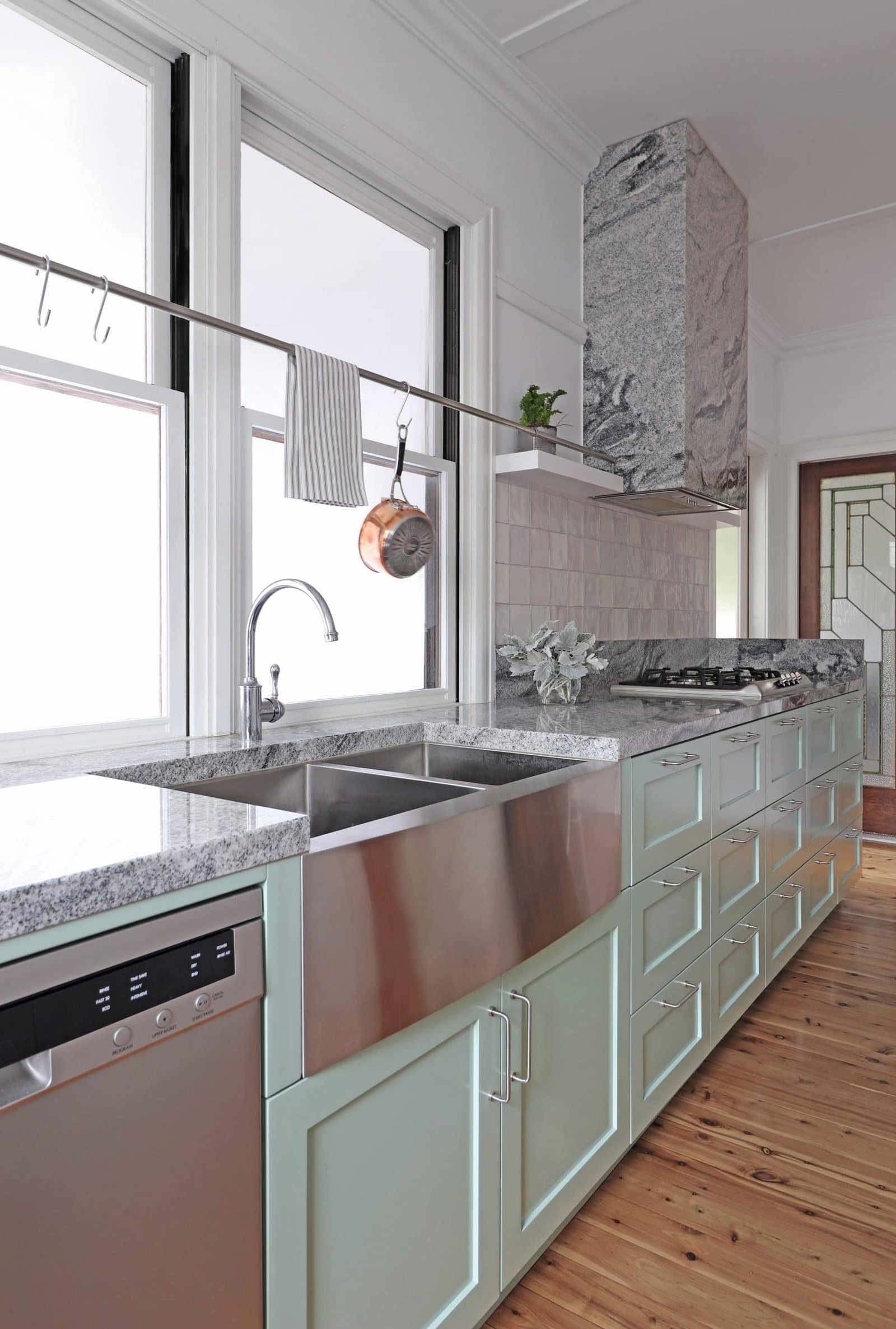
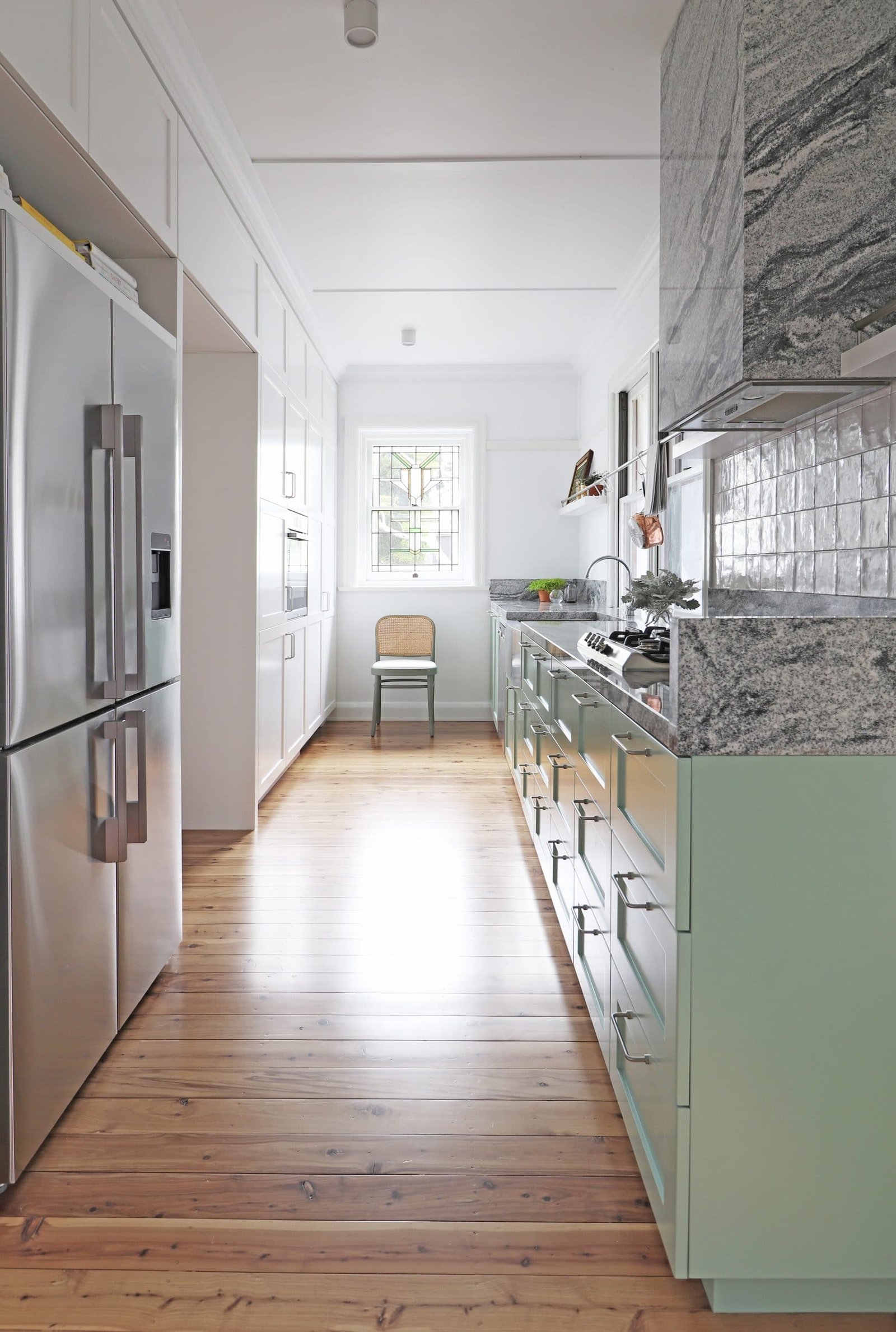
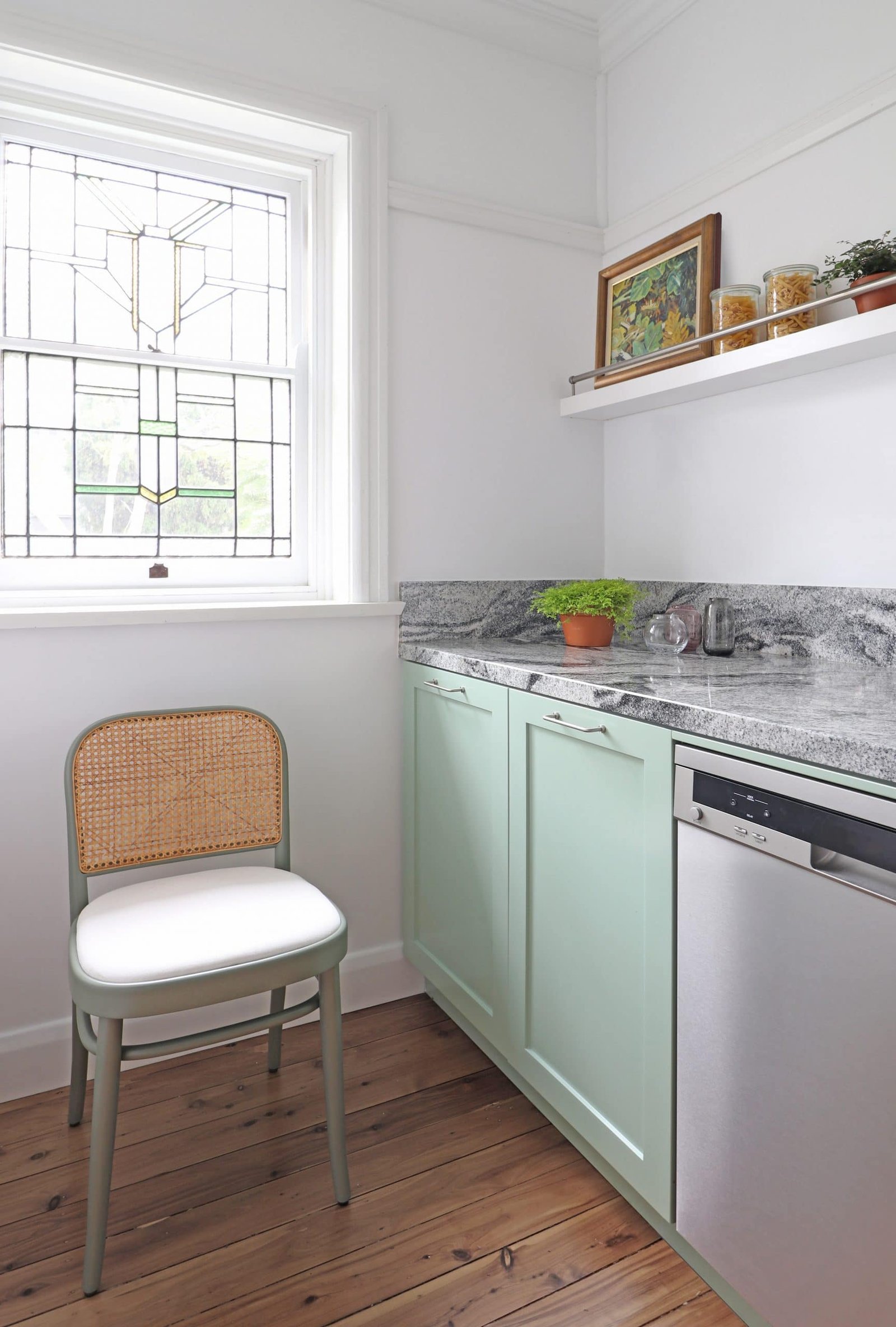
This New Lambton home, elegantly transformed by Newcastle based Horton & Co Design, features SNB Stone’s stunning Viscount White Granite for all kitchen surfaces. The polished finish effortlessly accentuates the salt and pepper wave patterns running across the benchtop and transferred up onto the range hood. Complimenting the natural stone is the delicate and mellow Xanadu green cabinetry, subtly contributing to the creative vision of the designer.
Granite is an excellent choice of natural stone for any application you may need. Its high hardness, strong chemical resistance and non-porosity makes it an option that will involve little to no maintenance costs into the future. Its is typically patterned quite subtly, with a simple colour palette, which allows the stone to have a accentuating effect on the other interior decór choices made.
Learn more about Horton & Co. Design.
Limestone started life on the sea floor, built up over millions of years from shells and marine sediment. In this part of our History of Natural Stone series, we follow it from the pyramids to Notre-Dame to the modern Australian home.
Limestone in Ancient Times
In Ancient Egypt, limestone was so plentiful that it could be quarried where it was needed. It is also a soft stone, which made it easy to work with. According to Global Egyptian Museum, the pyramids used limestone quarried from the very plateau on which they stood.


Why is Ancient Roman Concrete so Durable?
Look to the Pantheon, with ‘the world’s largest unreinforced concrete dome,’ built a staggering 1900 years ago.
According to an article by the Massachusetts Institute of Technology, limestone was the secret ingredient. That the Romans were advanced engineers is clear, because so much of the ancient civilisation’s concrete structures still stand today.
It has taken decades of research to determine what made these concrete structures so strong, weathering thousands of years in the harshest conditions like sewers and seawalls. A team of investigators from MIT, Harvard University and laboratories in Italy and Switzerland discovered that this ancient concrete was self-healing.


The concrete from this period contained millimetre-size chunks of lime throughout. For a long time these lime clasts were seen as functionless, simply a product of inferior mixing techniques. However, the study suggests that the Romans had actually developed an advanced method of concrete manufacturing, called hot-mixing, in which limestone was heated into its more reactive form, called quicklime. When cracks formed in this concrete, ‘the lime clasts react with water to heal the crack.’
Limestone in Medieval Times
Many of the cathedrals of ancient Europe are made of limestone. This is because when first cut, limestone is soft enough for intricate stonework, ornate detail being a key characteristic of Gothic architecture. Notre-Dame Cathedral was originally built primarily using limestone. Different varieties were used depending on the densities needed for specific structures. Traditional Lutetian limestone, sourced from underground quarries beneath Paris, made up a foundation of uniform blocks which formed the facade, as well as the main walls and arches.


Following the devastating 2019 fire that damaged mostly the top spire of the cathedral, Medievalists.net reveals insight into the stone restoration of Notre-Dame. Extensive work was done to ensure the replaced stone blended seamlessly with the cathedral’s original fabric.
‘Damaged sections were repaired using lime mortar, a material compatible with the original medieval construction techniques.’ The restoration also used 3D printing to reconstruct damaged stone sculptures, producing replicas that matched the original materials in quality.

This historic gothic cathedral, like so many other monuments of Medieval Europe, stands as a testament to the strength and beauty of limestone. With the capabilities of modern technologies, we are able to get the most out of these materials.
Closer to Home: The Nullarbor Plain
Closer to home, The Nullarbor Plain, traditionally named Oondiri, is shared by the Mirning clans and Yinyila people. This flat semi-arid region is known for the Bunda Cliffs, The 90 Mile Straight and the best whale-watching viewing area at the Head of the Bight.

Nullarbor represents the world’s largest single exposure of limestone bedrock, occupying approximately 200,000 square kilometres. The Plain is a former shallow seabed, indicated by the skeletal remains and shells of marine organisms deposited in the stone. Some of these fossils include rare extinct megafauna, for instance, marsupial lions.
The limestone formed a karst landscape over thousands of years, which means that the low-level acidity of rainwater slowly dissolved the bedrock, creating extensive cave systems and underground lakes. The caves are formed entirely out of limestone, and some, like the Koonalda, feature ancient rock art by First Peoples of the area.
Limestone in the Contemporary Home
The softness that allowed the Egyptian masons and Gothic stonecutters to carve and shape their unique designs is why limestone continues to be so at home in Australian contemporary interiors. Its ability to be honed and carved lends it beautifully to the many applications it is used for. From warm, textured flooring, to earthy benchtops and cladding, limestone is as at home in a sun-drenched courtyard as it is in the kitchen. Like we see in the historic monuments, limestone’s qualities develop with time. A colour that shifts with the light, and a surface that softens. This is a stone that wants to be lived with, and in.
View our full limestone range online and come visit a showroom in Sydney, Melbourne or Brisbane.