As part of our History of Natural Stone series, Dolomite. A stone so visually similar to marble it has been used in its place for centuries. Flying under the radar of marble’s reputation is a history that began 250 million years ago, and a set of properties that make it a natural choice for many applications.

Déodat de Dolomieu and the Alps
In the 18th century, French geologist Déodat Gratet de Dolomieu was the first scientist to formally identify and collect dolomite samples in the Alps. He distinguished this as a stone separate from limestone by noticing that it did not fizz or effervesce when exposed to acid.
This insight began our knowledge of dolomite, also known as dolomite rock, dolostone or dolomitic rock.
Ongoing Geological Mystery
Dolomite is often found interbedded with limestone, and most deposits are thought to have formed secondarily from it.
The intricacies of the formation remain genuinely mysterious. Scientists can convert it back into limestone, but not the reverse. This peculiar one-way relationship is something researchers are still working to explain. What we do know is that dolomite generally formed during periods when sea levels were at their highest relative to land; at least 65 million years ago. It is also a practical industrial material, used in agriculture, glass manufacturing, and chemical production, including in magnesium supplements and Epsom salt.
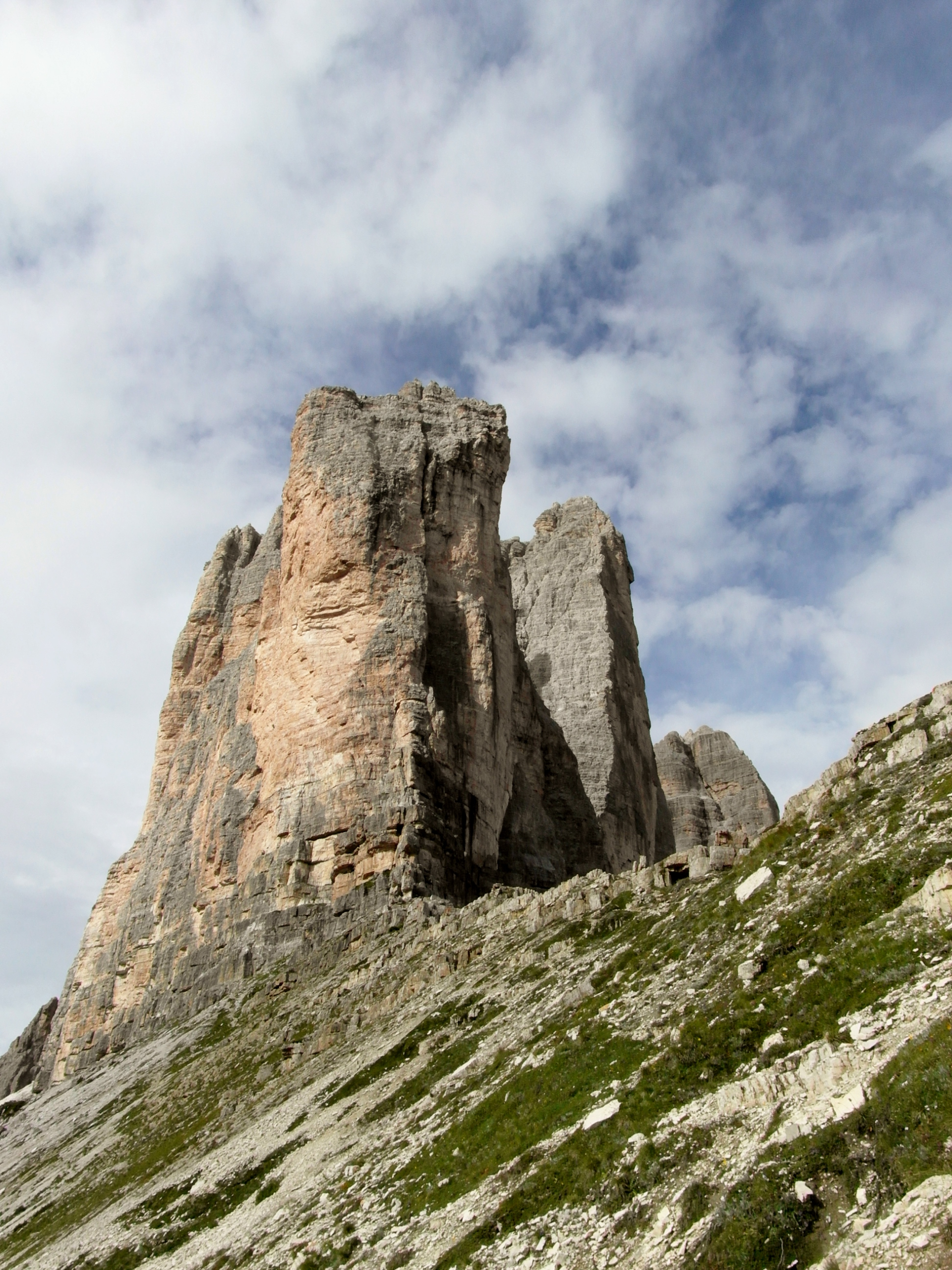
Brief Notes on the Dolomites’ History and Folklore
In 1864, the Dolomite mountain range in northeastern Italy was officially named after its geological foundation. The Dolomites share a rich history blending Austrian, Italian and Ladin traditions, the latter being one of the oldest continuing ethnic groups of the Alps, whose language and cultural traditions still thrive in remote valleys like Val Gardena and Val Badia.
The range’s history spans from Roman rule through to the battlefields of World War I, where the jagged peaks became the frontline of high-altitude battle between the Italians and Austro-Hungarian forces. Entire supply networks, barracks and tunnels were carved directly into the rock.
On a mythic level, these peaks are holders of ancient fairy tales.
A particular lore beloved to the area involves the Prince of the Dolomites, who married the Princess of the Moon. To cure her homesickness, her people descended from the sky and spun moonlight into silver threads, draping the dark rock in shining white stone.
Dolomite in the Contemporary Home
Think of dolomite as marble’s harder, more grounded sibling. It offers the same visual richness, with sweeping veins, deep palettes and quiet luxury; just with greater hardness, lower reactivity, and higher etch resistance. For those who love the look of marble but want a surface better suited to everyday life, dolomite is a compelling answer.

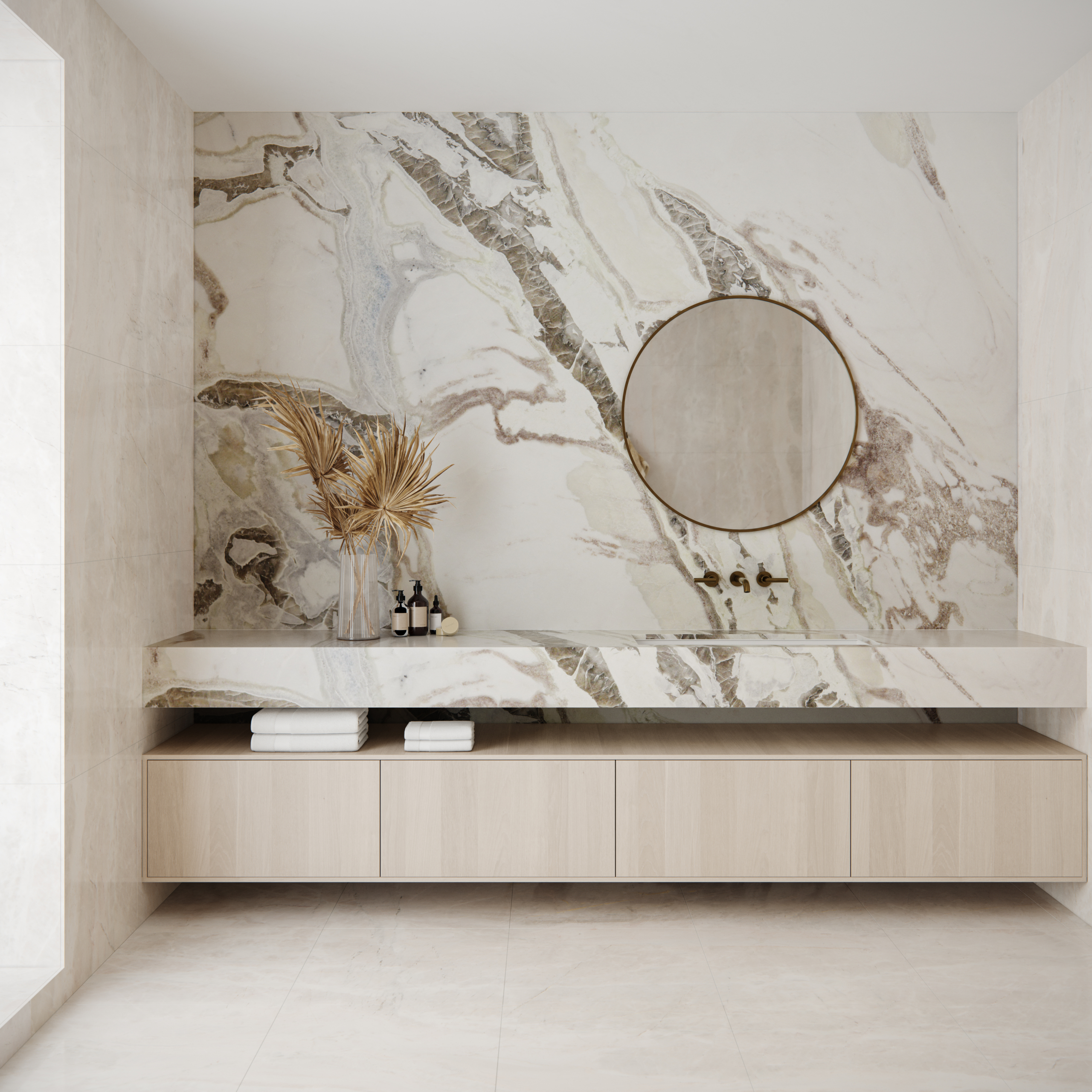
Like marble, dolomite will develop a patina with use over time, but more slowly, and with more forgiveness. When properly sealed, it is well suited to a wide range of indoor and undercover applications, from kitchen benchtops and bathroom vanities to feature walls and flooring.