
Stone in a bathroom deals with water, steam, soap and cleaning products every day, which makes it the hardest room in the house to keep stone looking its best. This part of our Stone Care Guide covers what soap scum and hard water do to natural stone, how to clean them off safely, and how to keep showers, vanities and splashbacks in good shape for years.
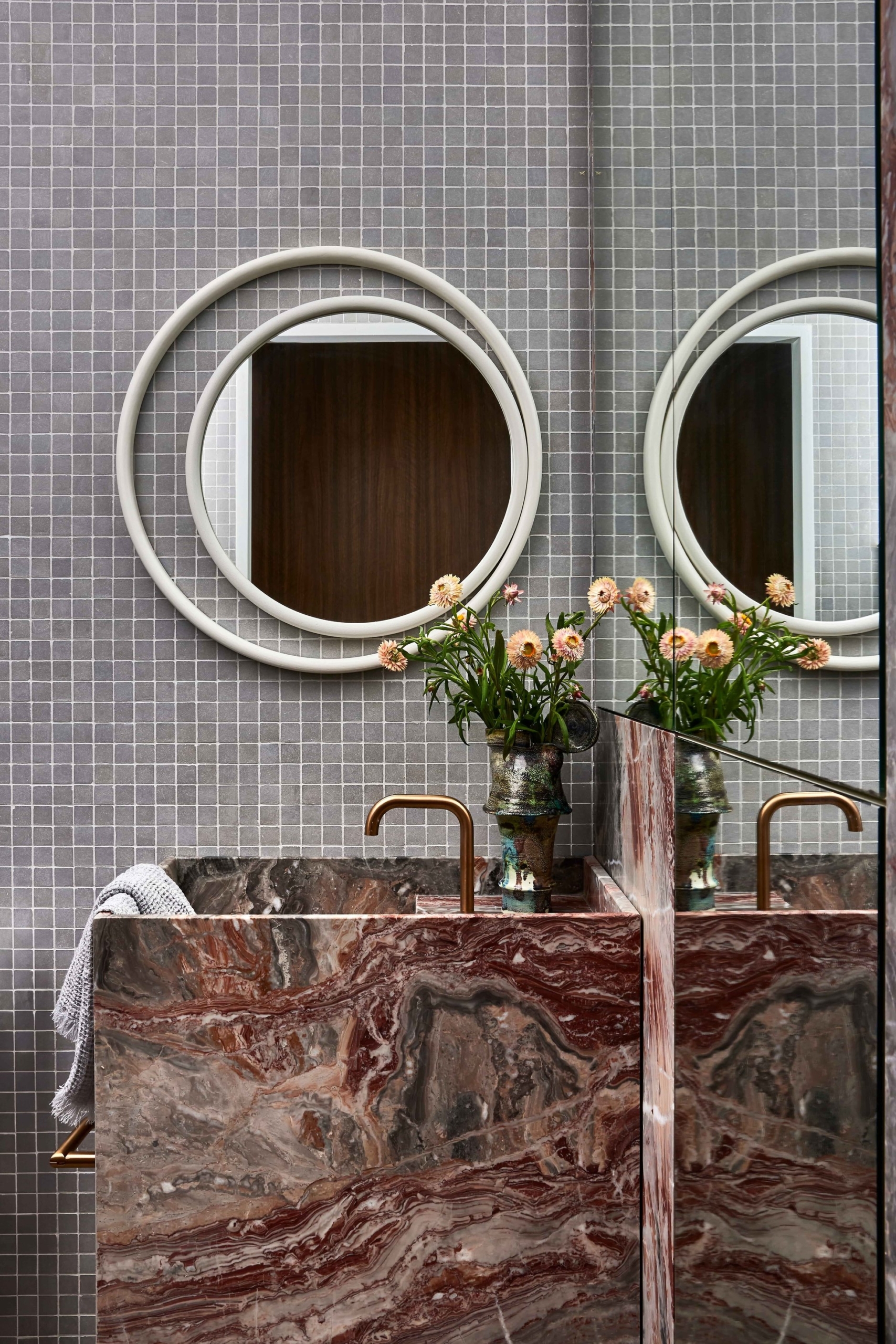
Why Bathrooms Are Tough on Natural Stone
Unlike the kitchen bench which deals with the occasional spill, stone in the bathroom is wet most of the day. Water sits in corners and along grout lines, steam settles on every surface, and soap, shampoo, toothpaste and perfume all end up on it sooner or later. Add a poorly ventilated room and you have the conditions for soap scum, mineral marks and mould.
The other thing that can be neglected is the cleaning products we use. Many bathroom sprays are made to dissolve limescale, which means they are acidic. That works on a ceramic tile, but on marble, limestone or travertine an acid eats into the surface and leaves a dull mark called an etch.
What Soap Scum Actually Is
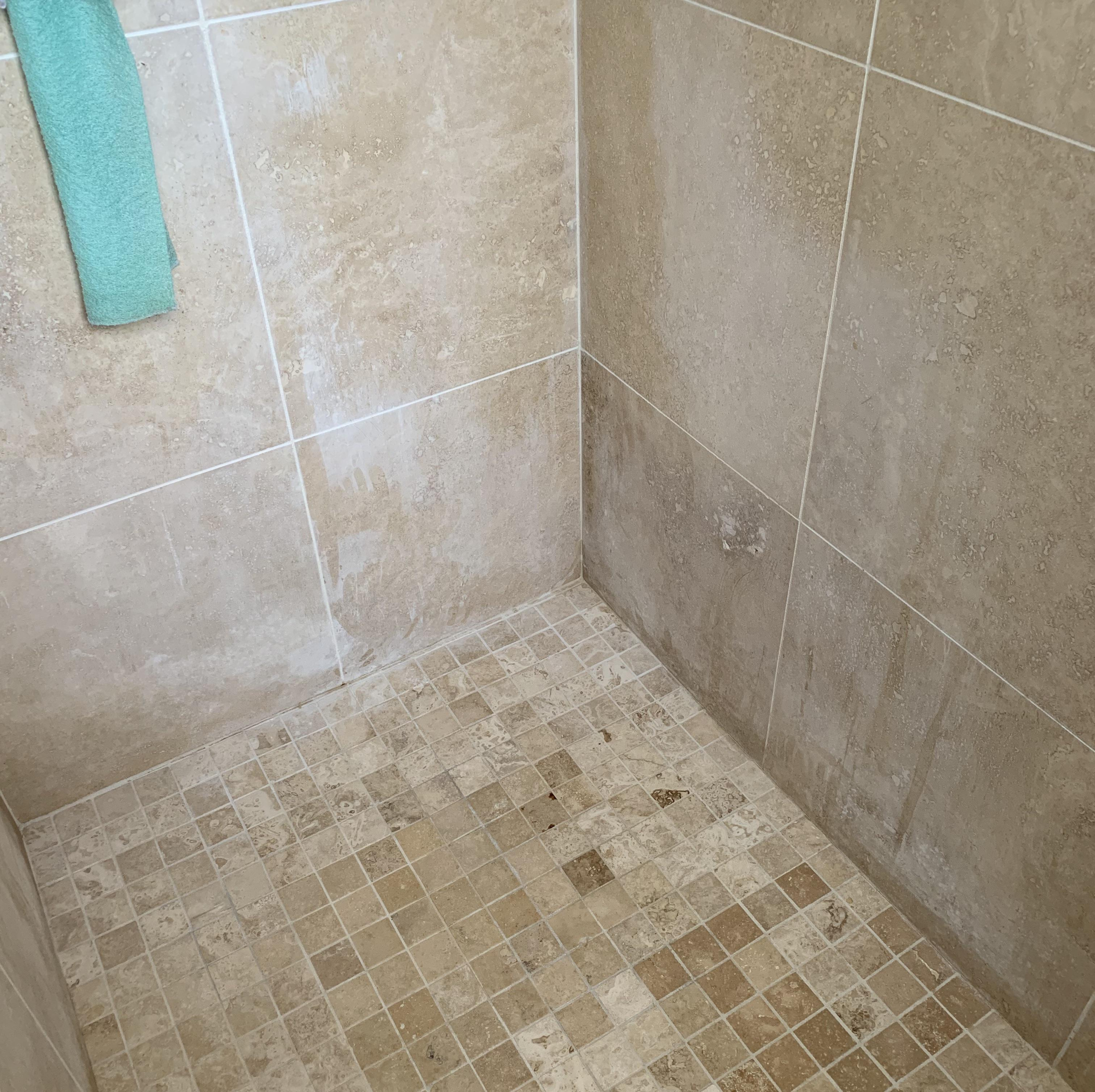
Soap scum is the chalky, greyish film that builds up on shower walls, benches and around taps. It forms when soap reacts with the calcium and magnesium in tap water.
The result does not dissolve in water, so it sticks to the surface, and body oils and skin cells get caught up in it too. Bar soap is the worst offender, because of the fats it is made from.
How to Remove It Safely
Use warm water, a cleaner made for natural stone with a neutral pH, and a soft cloth or non-scratch sponge.
Work in small sections, rinse well and dry the surface. For heavier build-up, look for a soap scum remover that says it is safe on natural stone. Test your cleaner on a small, hidden spot first.
What not to use:
- Vinegar, lemon juice, most supermarket bathroom sprays and anything that says it removes limescale.
- Skip abrasive powders and scourers too as they scratch polished stone and wear away the sealer.
Stop It Coming Back
The easiest fix is a squeegee or a towel after every shower. It takes thirty seconds and stops water drying on the stone. Run the exhaust fan or open a window. If you use bar soap, try switching to a liquid wash, or consider a more frequent cleaning schedule.
Hard Water Marks & Mineral Build-Up
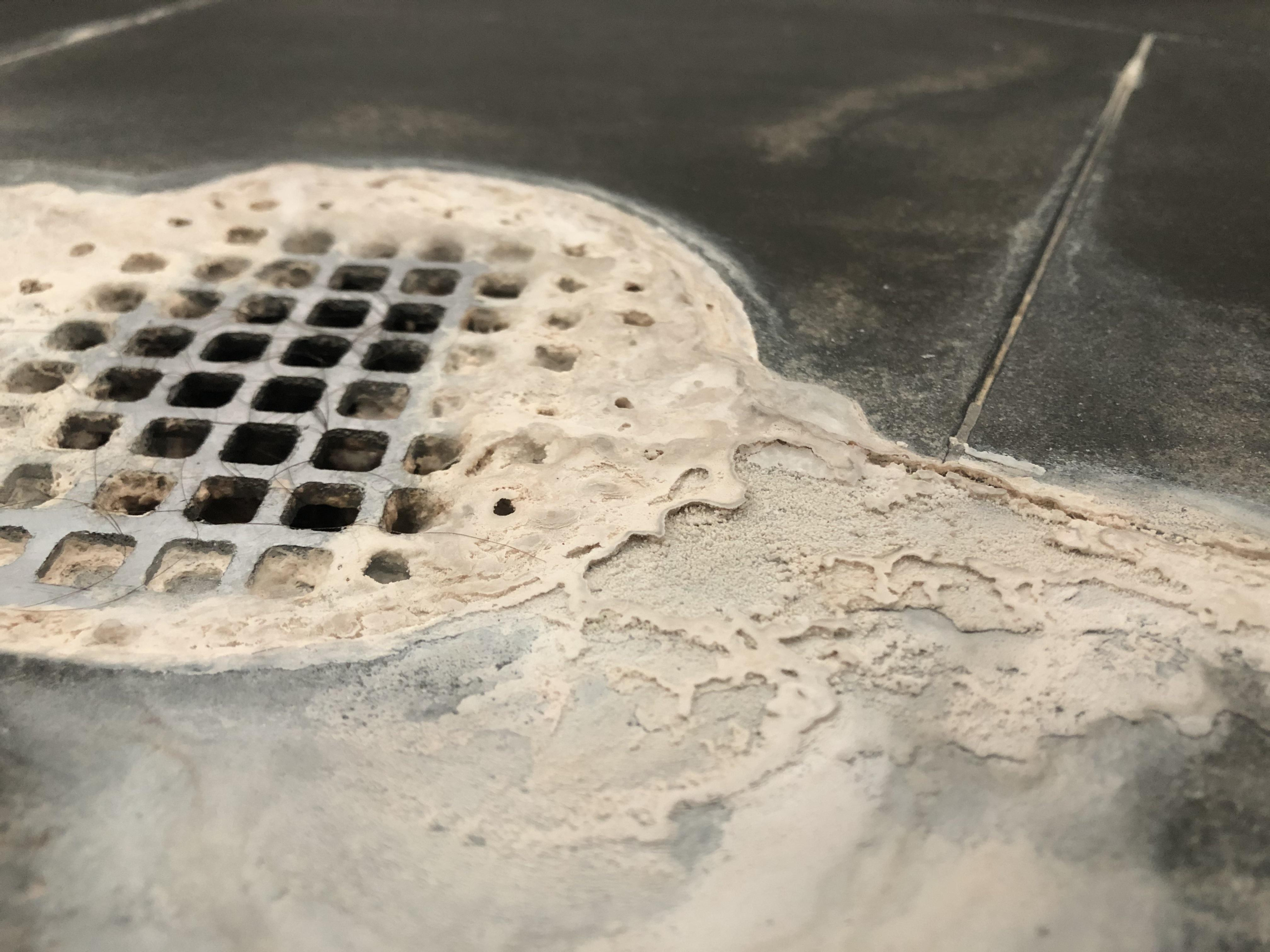
All tap water carries some dissolved minerals. When a drop of water dries on stone, those minerals stay behind as a white ring or crust. Over time they build up around taps, drains and shower screens.
What Not to Use on Marble, Limestone and Travertine
The usual advice for hard water marks is vinegar or a descaler. On marble, limestone and travertine that is the worst thing you can do. These stones are calcite, and acid dissolves calcite, so the mark comes off and takes a layer of stone with it. On any other stone, descalers still wear down the sealer.
Safe Ways to Remove It
Start with a stone-safe cleaner and a soft cloth, then buff dry. A plastic scraper will lift a crust without scratching. Granite and quartzite can take a little more effort. If marble or limestone has already been etched, a stone restorer can hone and polish it back.
Vanity Tops and Silicone
Vanity tops see more than water. Toothpaste, mouthwash, perfume, make-up, hair dye and nail polish remover all land on them. Some are acidic, some are oily and some have strong colour, so the safest habit is to wipe spills straight away. A small tray for bottles and products keeps rings off the stone.
Check the silicone where the vanity meets the wall and around the basin. Mouldy silicone is better replaced than scrubbed, and it is worth asking for a silicone that is suitable for natural stone, as some types can leave an oily mark on porous stone.
Grout needs looking after too, as mould usually starts there. Good ventilation does most of the work. For cleaning, use a mould remover that is labelled safe for natural stone rather than straight bleach, which can damage the sealer and discolour some stones.
How Sealed is my Stone?
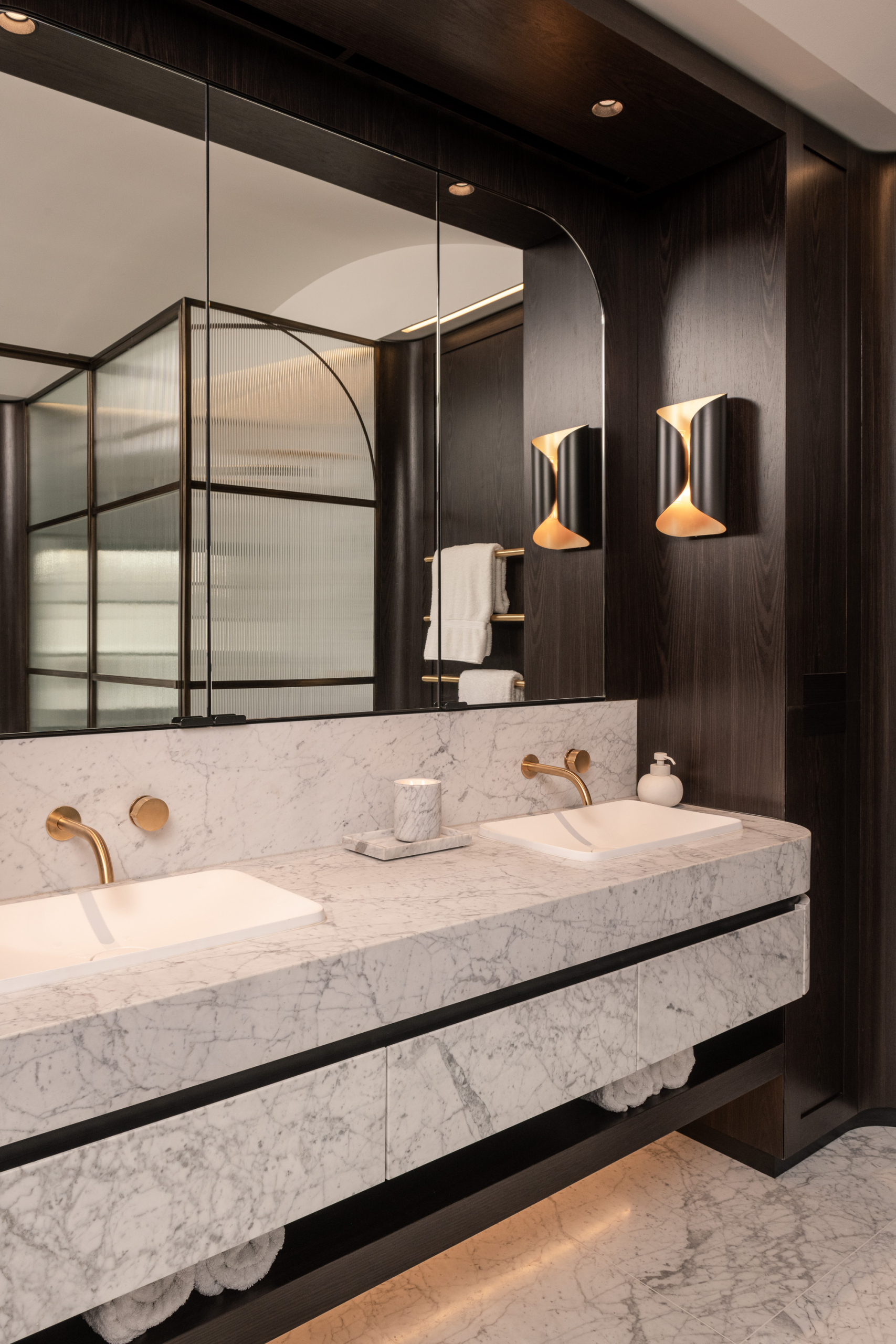
A sealer does not make stone waterproof. It slows down how fast water, soap and oils soak in, which gives you time to wipe them off. Showers wear a sealer down faster than anywhere else in the house.
The Water Drop Test
Put a few drops of water on the stone and wait a few minutes. If it darkens, water is soaking in and it is time to reseal. How often depends on the stone, the sealer and how much the shower is used, so test at least once a year.
Our Etching vs Staining article goes into sealers in more detail.
Which Stones Suit a Bathroom Best?
Any natural stone can work in a bathroom. Some just need more looking after.
Quartzite and granite are hard and do not react to acid, which makes them the easiest to live with in a shower or on a vanity. Marble, limestone and travertine are calcite stones. They are beautiful in a bathroom, but they will etch, and they need a bit more care.
Finish matters as much as stone. A honed finish has more grip underfoot and hides etching better than a polished one, which makes it a good choice for shower floors. For any wet floor, check the slip rating with us before you choose. If you want the look of stone with almost no upkeep, porcelain does not etch, does not need sealing and shrugs off most cleaning products.
A Simple Bathroom Stone Care Routine
Every day: squeegee or towel dry the shower and wipe the vanity.
Every week: clean with warm water and a stone-safe, neutral cleaner, then dry.
Every few months: check the silicone and grout.
Every year: do the water drop test, reseal if the stone darkens, and have a stone restorer look at any etching or wear.
Bathroom Stone Care FAQs
Can I use vinegar on marble in the shower?
No. Vinegar is an acid and will etch marble, limestone and travertine. Use a stone-safe, neutral cleaner instead.
How often should I seal a stone shower?
There is no fixed timetable. Do the water drop test at least once a year and reseal when the stone starts to darken.
Is travertine OK in a shower?
Yes, as long as the holes are filled, the stone is sealed and it is cleaned with stone-safe products.
Can I use bleach on natural stone?
Avoid it. Straight bleach can damage the sealer and discolour some stones. Use a mould remover made for natural stone.